

Mon Dec 08 2025
Minimum Payments Myth & More Decoded: What 50% of U.S. Consumers Don’t Know About Managing Credit Wisely
Many people think they know a lot about credit. But as it turns out, there may be some crucial knowledge gaps among consumers.

FDIC-Insured - Backed by the full faith and credit of the U.S. Government
February 10, 2026
We surveyed 1,000 people to find out how rising costs, lack of savings and income uncertainty may be shaping personal finances in 2026.

In this article:
In a new survey we conducted with 1,000 U.S. consumers, we found a revealing snapshot of how people across the country are navigating their finances heading into 2026. From the rising cost of groceries and essentials to growing concerns over savings, debt, and income stability, the findings show that while financial challenges remain, many people are taking steps to better understand and manage their money.
Our survey also uncovered notable differences across income levels, genders, and generations, highlighting both the pressures that U.S. consumers are facing and the optimism many are holding onto as they plan for the year ahead.
54% of U.S. consumers said groceries and essentials had the biggest impact on their finances over the past year
36% of women feel worse about their financial situation compared to this time last year, vs. 26% of men
62% of U.S. consumers making under $50,000 do not have an emergency savings fund
28% of U.S. consumers said their credit card balance increased in 2025; only 14% said it decreased
7% of Gen Z respondents expect their household income to increase in 2026
44% of U.S. consumers do not feel financially prepared for potential economic uncertainty in 2026
52.5% of U.S. consumers are likely to seek financial advice or education in 2026
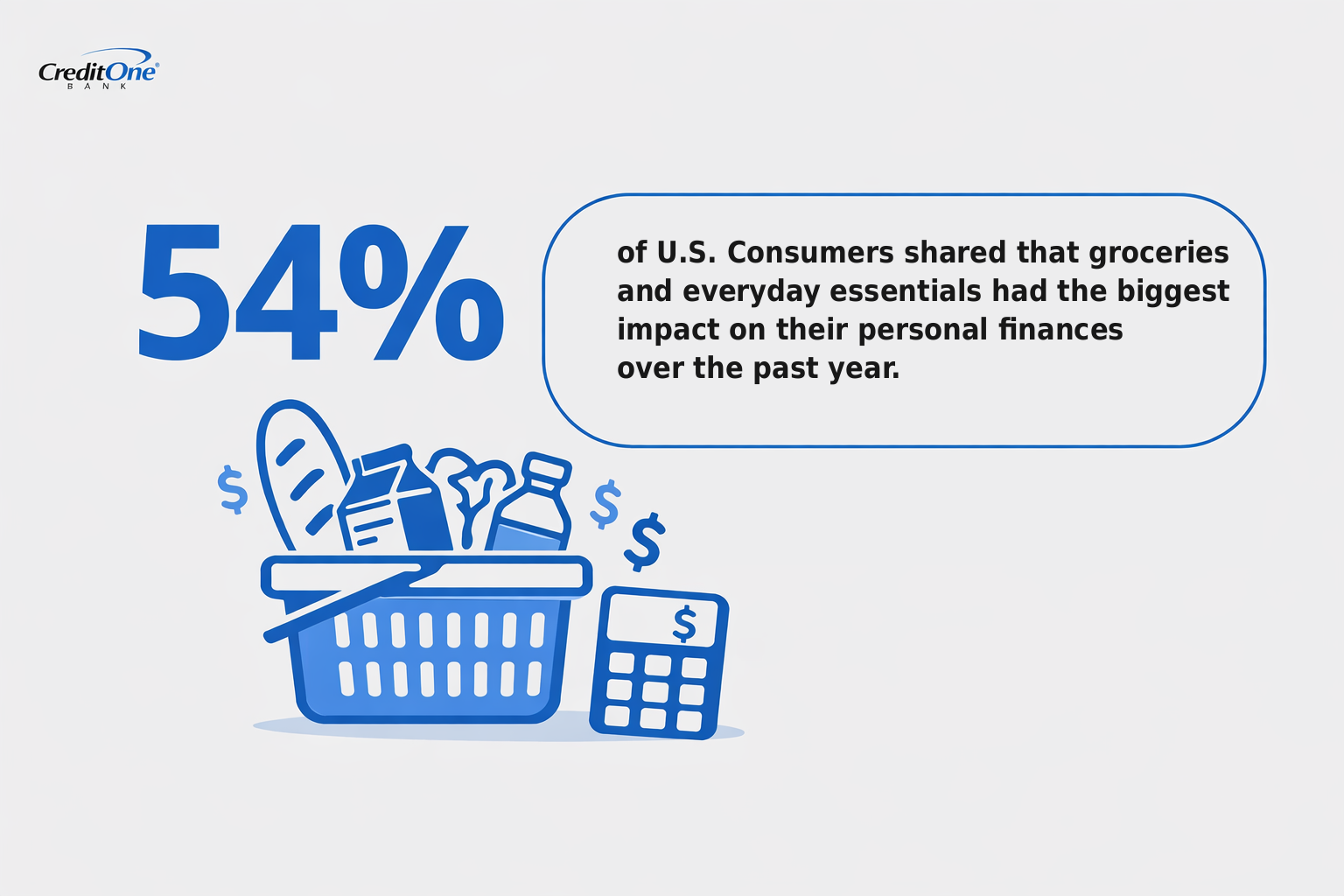
In our recent survey of 1,000 U.S. consumers, more than half (54%) shared that groceries and everyday essentials had the biggest impact on their personal finances over the past year.
From weekly grocery runs to household must-haves, these everyday expenses have taken center stage in shaping spending habits across the country. While financial challenges remain, the results highlight just how closely daily life and budgeting have become intertwined.
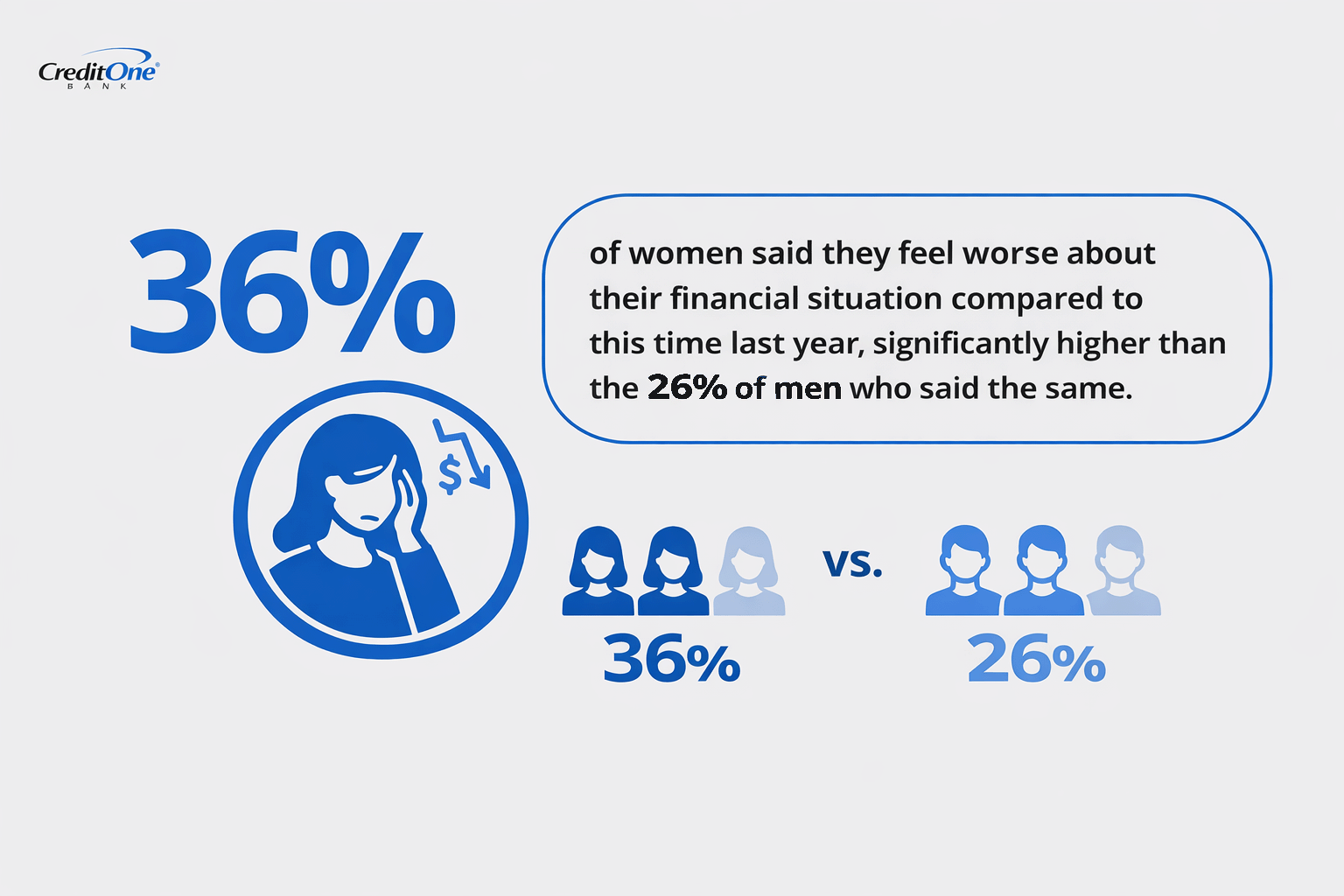
Building on insights from our survey, we also uncovered a notable gender gap in how U.S. consumers feel about their financial well-being. According to the survey, 36% of women said they feel worse about their financial situation compared to this time last year. That’s significantly higher than the 26% of men who said the same.
This finding suggests that women may be experiencing a disproportionate share of financial stress, whether due to rising costs of essentials, income disparities, or caregiving responsibilities that affect their financial stability. It’s a reminder that while financial challenges are widespread, the impact can look very different depending on personal circumstances.
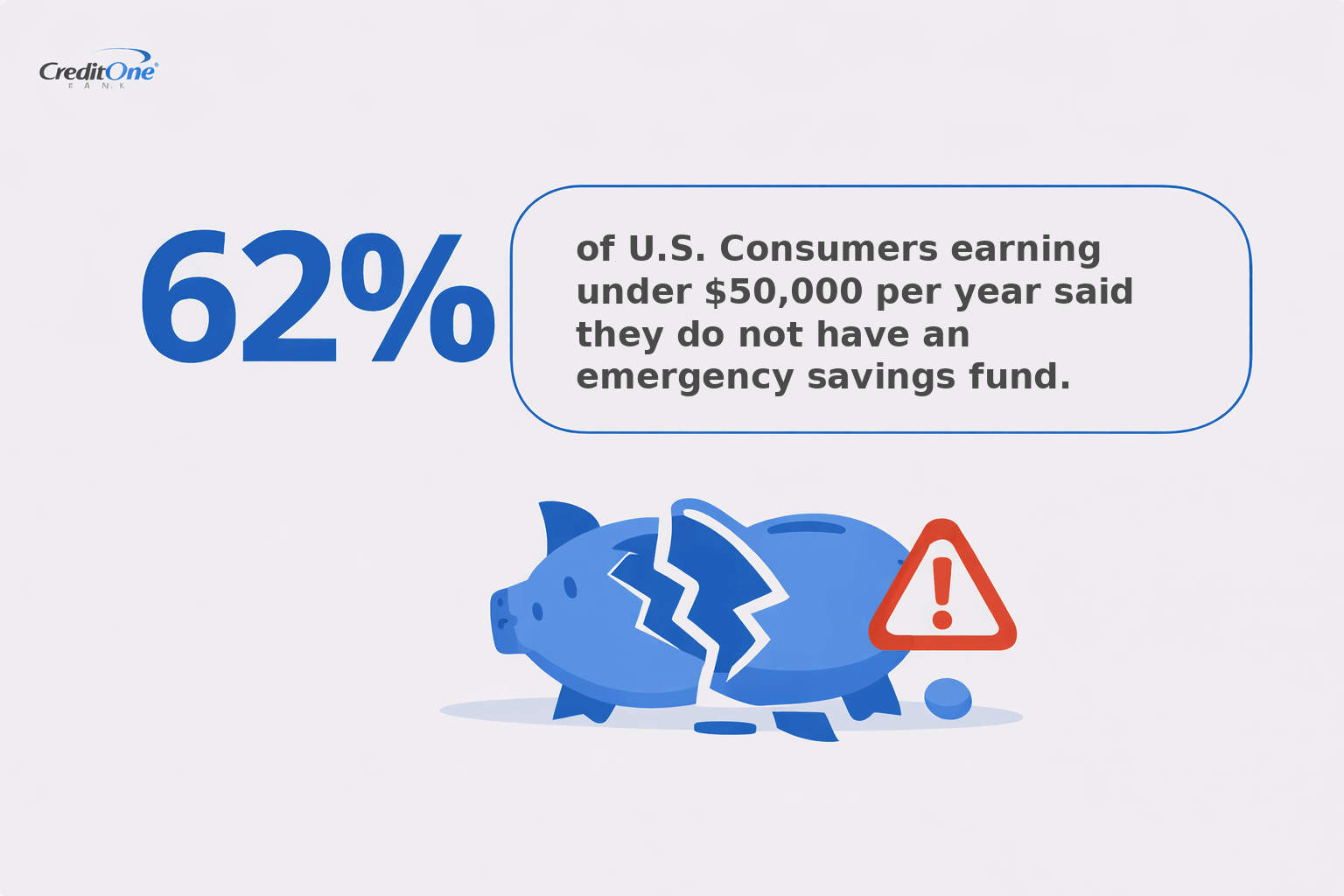
Our study also shed light on a critical area of financial preparedness: emergency savings. Survey results show that 62% of U.S. consumers with a household income under $50,000 per year report not having an emergency savings fund.
This striking figure highlights the financial vulnerability faced by lower-income households, where even a minor unexpected expense could create significant strain. As cost-of-living pressures persist, the data may point to a growing need for accessible tools and resources that support financial stability and long-term planning for working U.S. consumers.
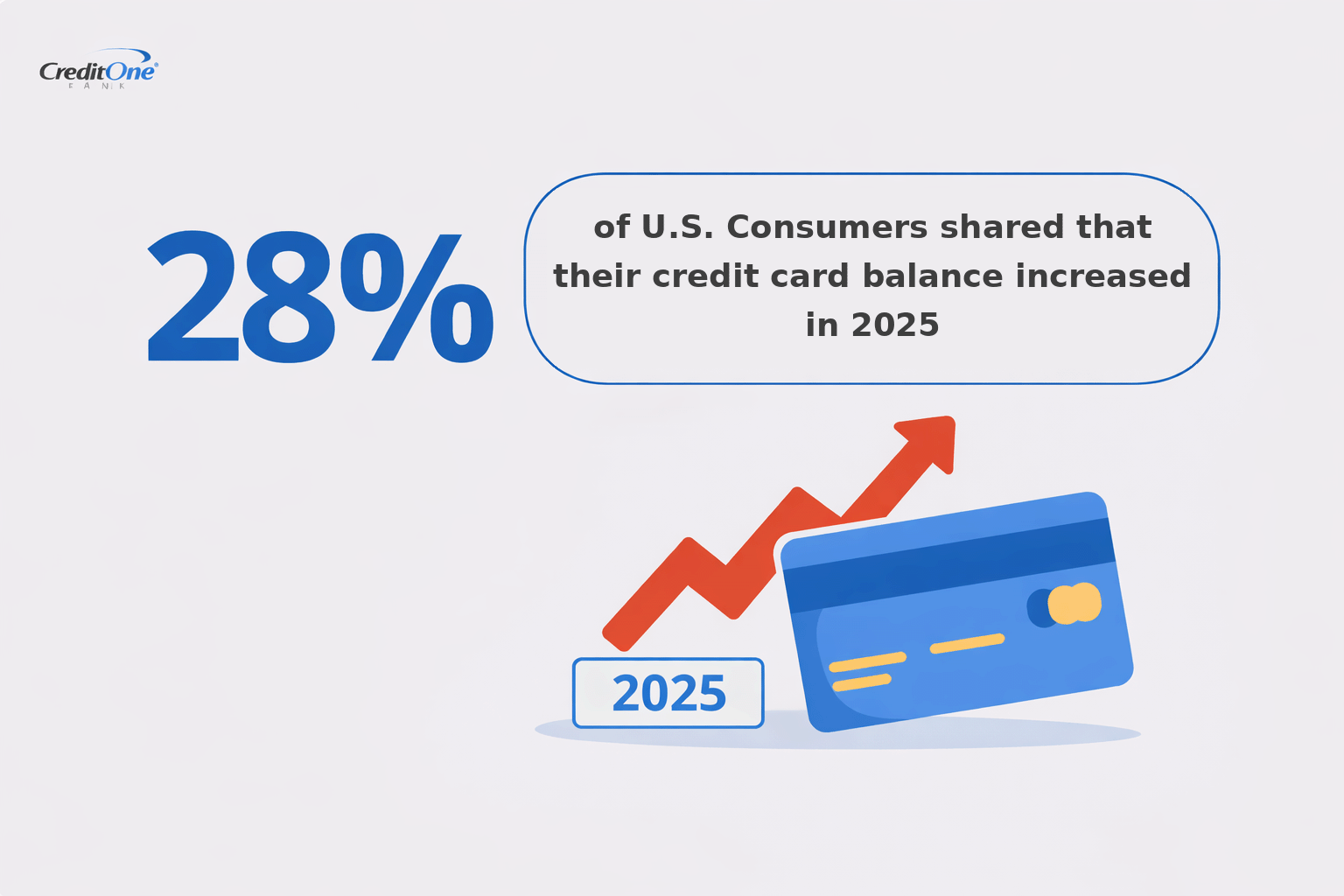
Our study found that 28% of U.S. consumers say their credit card balance increased in 2025. That’s double the number who reported a decrease, at just 14%. This trend suggests that more people may be leaning on credit to cover everyday expenses or manage larger financial pressures.
While rising balances can be a concern, the data also offers insight into how U.S. consumers are navigating the evolving economic landscape and making short-term choices to stay afloat.
When it comes to expectations for the year ahead, Gen Z appears especially cautious. Just 7% of Gen Z respondents said they expect their household income to increase in 2026, reflecting a broader sense of uncertainty about near-term financial growth.
Rather than signaling confidence, the data suggests a generation keeping expectations in check. For many Gen Z adults who are early in their careers or newly entering the workforce, financial planning may be shaped by rising costs and an unpredictable economic outlook.
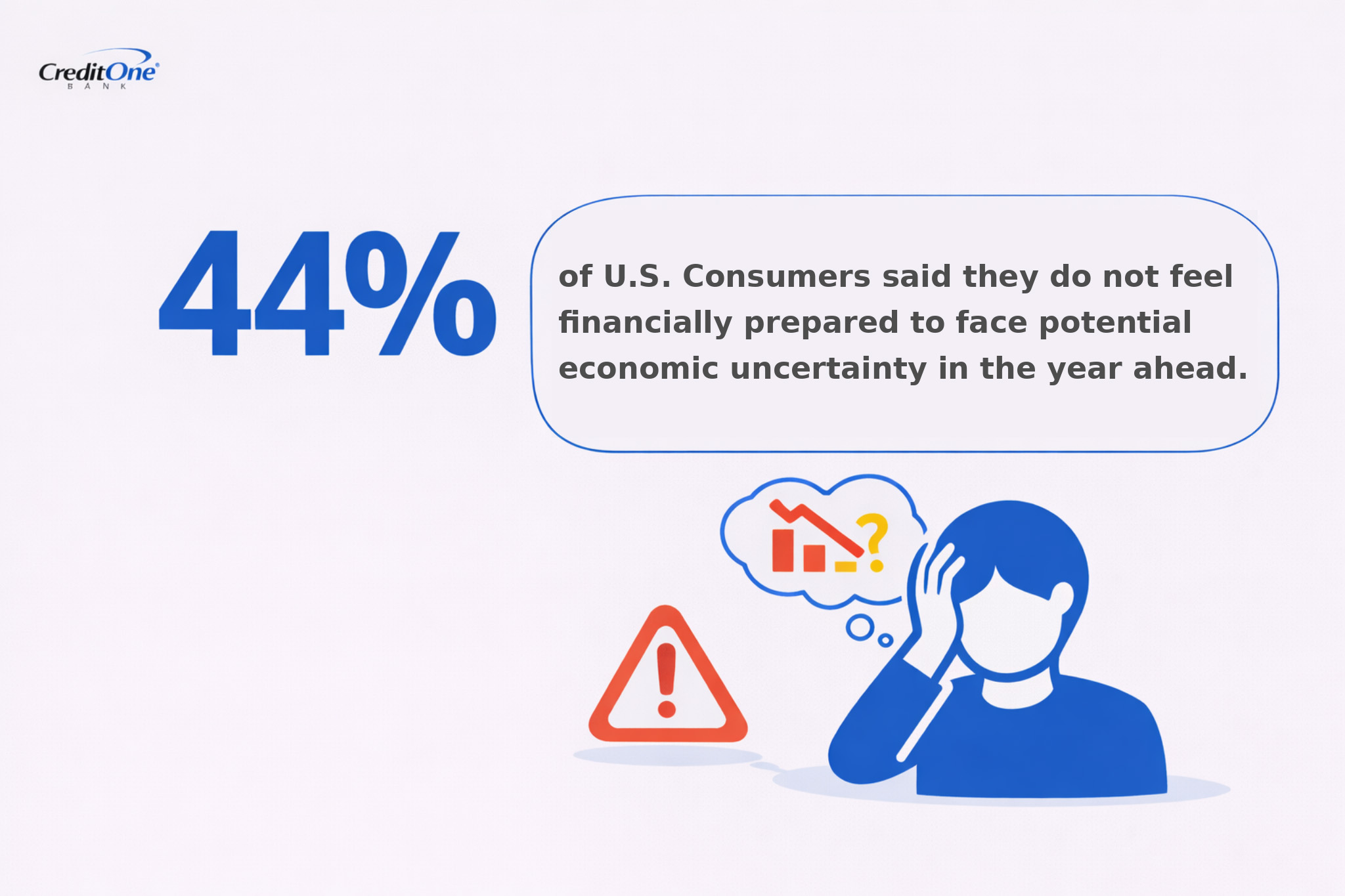
As U.S. consumers look ahead to 2026, financial preparedness is top of mind for many, and a significant portion are feeling uneasy. 44% of respondents said they do not feel financially prepared to face potential economic uncertainty in the year ahead.
Whether due to limited savings, rising debt, or income instability, the findings may reflect a widespread concern about the unknowns of the future. Still, this awareness could be the first step toward more proactive financial planning as individuals and families work to strengthen their financial footing.
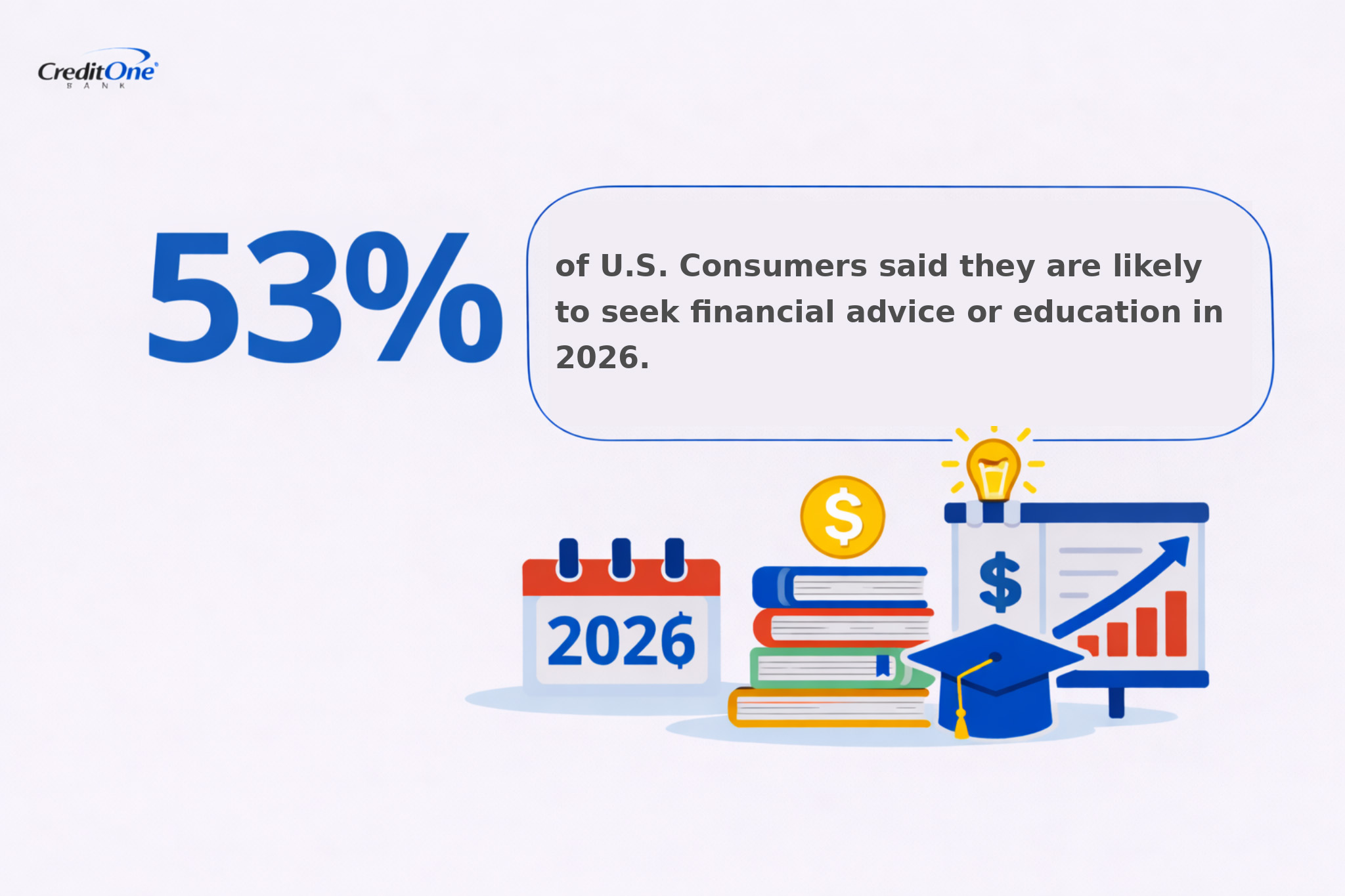
Amid growing financial challenges and uncertainty, many U.S. consumers are looking ahead with a proactive mindset. Based on our survey, 53% of respondents said they are likely to seek financial advice or education in 2026.
This encouraging trend signals a shift toward greater financial awareness and a desire to make informed decisions about money management. Whether it’s through budgeting tools, expert guidance, or educational resources, U.S. consumers are showing a strong willingness to take control of their financial future.
Despite the financial stress many are feeling, our survey shows that U.S. consumers are typically thinking ahead and looking for ways to improve their situations. Whether it’s planning for unexpected expenses, seeking out financial advice, or simply trying to stay on top of everyday costs, many people are taking steps, big and small, to feel more in control.
The year ahead may come with uncertainty, but there’s also a clear sense of effort and intention behind how many consumers are choosing to manage their money. And sometimes, that steady progress is what matters most.
Find the full survey and responses here.
This report is based on an original survey conducted in December 2025 among 1,000 adults across the United States via Pollfish. The survey was designed to capture how U.S. consumers define financial success, experience financial stress, and think about money, work, and stability in the near future. Respondents represented a broad mix of ages, income levels, and genders. All questions and analyses were developed internally, and the findings reflect firsthand insights gathered exclusively for this study. As a result, the data and conclusions presented here are unique to this research and offer an original snapshot of U.S. consumers’ financial attitudes at this moment in time.
Readers are welcome to utilize the insights and findings from this study for noncommercial purposes, such as academic research, educational presentations, and personal reference. When referencing or citing this article, please ensure proper attribution to maintain the integrity of the research. Direct linking to this article is permissible, and access to the original source of information is encouraged.
For commercial use or publication purposes, including but not limited to media outlets, websites, and promotional materials, please contact the authors for permission and licensing details. We appreciate your respect for intellectual property rights and adherence to ethical citation practices. Thank you for your interest in our research.
This material is for informational purposes only and is not intended to replace the advice of a qualified tax advisor, attorney or financial advisor. Readers should consult with their own tax advisor, attorney or financial advisor with regard to their personal situations.
Mon Dec 08 2025
Many people think they know a lot about credit. But as it turns out, there may be some crucial knowledge gaps among consumers.

Mon Oct 20 2025
What’s in a number? Find out how adults from two distinct generations factor in credit scores and financial habits as they assess relationships.

Wed Oct 22 2025
Current economic uncertainty is causing many consumers to reassess their financial safety nets. Are they relying on emergency savings, turning to credit, or going without?